
No products in the cart.

How to Choose Handwoven Cushion Covers That Actually Last
Most cushion covers fail in the same place: the seam, six weeks after the photograph was taken for the listing. A handwoven cover is not automatically a durable one. The weave, the yarn, the dye, and the finishing all decide whether it survives a real living room or just a single styled shoot.
What “Handwoven” Actually Tells You (And What It Doesn’t)
Handwoven means the fabric was made on a loom operated by hand rather than a power loom. It says nothing on its own about thread count, fabric weight, or how the piece will wear. A loosely woven handwoven cotton can pill and thin faster than a tightly woven machine-loomed one. The word is a starting point for a quality conversation, not the end of it.
What handwoven does reliably give you is texture. Slight irregularities in the weave, small variations from panel to panel, a surface that catches light differently than a flat machine finish. If a cushion cover looks too perfect, too uniform, it is worth asking whether “handwoven” on the listing means hand-finished trims on a machine base rather than a genuinely hand-loomed fabric.
Fabric Weight Decides How It Wears, Not How It Looks in a Photo
Weight is measured in GSM, grams per square metre. Most handwoven cotton cushion covers fall between 150 and 300 GSM.
- Below 180 GSM: light, drapes well, better suited to decorative covers on a bed rather than sofa cushions that get sat on daily.
- 180 to 240 GSM: the working range for most living room cushions. Substantial enough to hold shape, still soft.
- Above 240 GSM: heavier weaves like thicker Kantha-layered cotton or coarse cotton-linen blends, best for floor cushions or statement pieces that take heavy daily use.
A listing rarely states GSM directly. Ask for it, or judge by feel: hold the fabric up to light. If you can see through it easily at a normal viewing distance, it is on the lighter end and will show wear sooner under daily contact.
Weave Type Changes the Care Routine

Plain weave cotton is the most common and the easiest to maintain. It washes well, softens with use rather than degrading, and hides minor stains better than smoother weaves.
Ikat and jacquard-style handwoven covers carry more structure in the yarn dyeing or pattern-setting process, which makes the surface slightly stiffer initially. This softens over the first few washes.
Kantha-embroidered covers are layered cotton with hand running stitch. The stitching adds durability to the base fabric but needs gentler washing, since repeated machine washing on a hot cycle can loosen embroidery threads over years of use.
Natural Dye or Chemical Dye: What Actually Matters for Longevity
Both natural and chemical (azo-free, reactive) dyes can be long-lasting when applied correctly. The real variable is dye fixing, not the dye source alone.
Natural dyes, indigo, madder, turmeric, and similar plant or mineral-based colours, tend to fade gradually and evenly over years, which many buyers find gives a piece more character rather than looking worn. They are more sensitive to direct sunlight and require cooler wash temperatures.
Reactive chemical dyes, when properly fixed, hold colour more consistently under harsher conditions but can bleed if not tested for colour fastness before the first wash.
A simple home test: dab a damp white cloth on an inside seam. If colour transfers heavily, expect some bleeding in the first wash regardless of dye type. Always wash a first-time handwoven cover separately.
How to Check Construction Quality Before You Buy
Three checks take under a minute and reveal most of what matters:
- Seams: turn the cover inside out. French seams or double-stitched edges resist fraying far longer than a single overlocked seam, especially on covers that get removed for washing regularly.
- Closure: a concealed zip or button placket that sits flush is a sign of attention to finishing. Visible, puckered zips usually indicate rushed production.
- Insert fit: a cover should be roughly 2 inches smaller than the insert it’s designed for. This keeps the cushion looking full rather than saggy after a few weeks of use.
Caring for a Handwoven Cushion Cover So It Actually Lasts
- Dry clean only. Do not wash or bleach. Steam or iron on low heat if required. Store in a cool, dry place away from direct sunlight.
- Turn the cover inside out before washing to protect the visible face and any embroidery.
- Air dry in shade. Direct sun accelerates fading, particularly with natural dyes.
- Iron on the reverse side, medium heat, especially for Kantha or embroidered pieces where direct heat on stitching can flatten texture.
- Rotate covers across seasons rather than leaving one cover on permanent daily use. This alone extends the life of a handwoven textile more than any single care step.
Frequently Asked Questions
Does handwoven mean the cushion cover will be less durable than machine-made?
Not inherently. Durability depends on fabric weight, weave tightness, and dye fixing more than on whether the loom was manual or powered. A well-made handwoven cover in the 180 to 240 GSM range will outlast a poorly finished machine-made one.
How often should a handwoven cushion cover be washed?
Every 4 to 6 weeks for regular sofa use, or sooner if visibly soiled. Overwashing wears down natural fibres faster than the soiling itself in most home settings.
Can handwoven cotton covers go in a washing machine?
Yes, on a gentle cycle in cold water, inside out, and ideally in a mesh laundry bag to protect embroidery or loose threads from friction against other items in the load.
Why do handwoven covers sometimes feel stiffer than machine-made ones when new?
Natural sizing agents used in the weaving process, plus tighter initial yarn tension in techniques like Ikat, both soften with the first two or three washes. This is normal and not a quality flaw.
A handwoven cushion cover, chosen with these checks in mind, is less a decorative object and more a small daily fixture in a room.
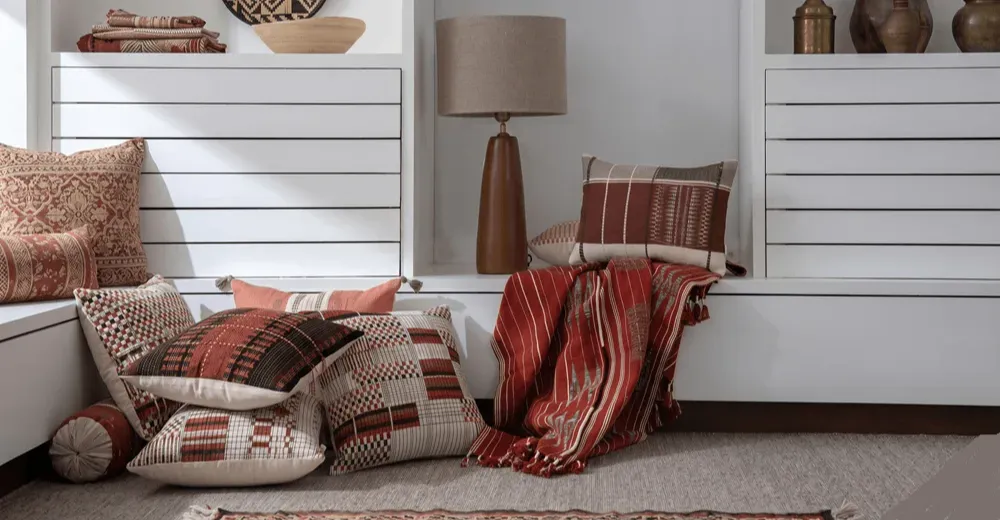
The next step is seeing how these covers actually sit in a room once chosen well, which is where styling comes in.


Leave a Reply