No products in the cart.
Handwoven Cotton Throws vs Regular Throws: Which is Better?
A throw is one of the quieter decisions in a home. It does not announce itself the way a sofa does, or demand attention the way a rug does. It sits folded over an arm, draped across a bed end, or pulled around a person on a cool evening. It is used without ceremony and noticed only when it is exactly right.
Most throws are not exactly right. They pill within a season, lose their drape after two washes, or sit stiffly on a sofa in a way that announces their synthetic origins. Choosing a handwoven cotton throw is a different experience entirely, and the difference is worth understanding before you buy.
This guide is about what separates a handwoven throw from its machine-made equivalent. Not cotton versus wool. Not Indian versus Scandinavian. The difference between cloth made by a person on a handloom and cloth produced on a power loom at industrial speed.
How Handwoven and Machine-Made Throws Are Actually Made
The Machine-Made Process
Industrial throw production uses power looms operating at high speed, producing metres of fabric continuously. Threads are held under significant mechanical tension. Finishing processes are applied after weaving: chemical softening to improve hand feel at point of sale, wrinkle-resistant treatments, and in some cases synthetic fibre blending to reduce production cost.
The result is a consistent product. Every metre is identical. This uniformity is the industrial loom’s strength, and its limitation. The fabric is correct but it has no character. Many of the finishing treatments that make it feel premium when new wash out within months, leaving a throw that declines steadily from its opening performance.
The Handloom Process
A handwoven throw is woven by a person on a traditional pit loom or frame loom, controlling warp tension and weft placement by hand. The process is considerably slower. A skilled weaver working a natural fibre produces a fraction of the yardage that an industrial loom produces in the same time.
Each metre of handwoven fabric carries what that speed produces: slight variations in tension, a subtly irregular surface, a warmth of texture that comes from being made rather than manufactured. No chemical softeners. No wrinkle-resistant coatings. Cotton thread, a loom, and the knowledge of a weaver who has spent years learning how the fibre behaves.
Handwoven vs Machine-Made Throws: A Direct Comparison
Factor | Handwoven Cotton Throw | Machine-Made Throw |
Softness over time | Gets softer and more supple with every wash. No chemical softeners to wash out. | Often soft initially due to finishing treatments. Declines with repeated washing. |
Drape and hand feel | Natural, relaxed drape from the open handloom weave. Falls beautifully over furniture. | Can feel stiff or mechanical. Synthetic blends resist natural drape. |
Breathability | Open organic weave allows airflow. Comfortable across seasons in Indian climates. | Tighter industrial weave traps heat. Synthetic blends add to this problem. |
Durability | Resilient handloom construction. A quality handwoven throw lasts for years of daily use. | Varies widely. Lower-end throws pill and thin within a season or two. |
Feel on skin | Naturally textured, hypoallergenic, no chemical residues. Suitable for sensitive skin. | May contain finishing chemicals or synthetic blends that irritate sensitive skin. |
Pilling | Natural cotton fibres with low mechanical processing pill very little over time. | Synthetic blends and high-speed weaving create fabric that pills faster with use. |
Environmental impact | Low energy process. Biodegradable natural fibres. Supports craft livelihoods. | High energy manufacturing. Chemical finishing. Synthetic blends do not biodegrade. |
Artisan support | Directly supports skilled Indian handloom weavers and their communities. | Industrial production. No craft employment benefit. |
Long-term value | Higher upfront cost. Exceptional over time. Replaces less frequently. | Lower upfront cost. Higher replacement frequency. Higher long-term cost. |
Why a Handwoven Throw Works Better in an Indian Home
India’s climate asks more of a throw than most. Used on a sofa in a city that swings between monsoon humidity and dry winter cool, a throw needs to breathe in warm months and provide genuine warmth when the temperature drops at night. Most synthetic throws fail one or both conditions.
Handwoven cotton manages this naturally. The open structure of the weave, produced by a weaver controlling tension at human pace rather than machine speed, creates spaces in the fabric that allow airflow. In warm weather, a cotton throw breathes rather than trapping heat against the body. In cooler months, that same structure holds warmth without stuffiness.
Nimmit’s throws collection also includes wool and alpaca options for those who want a warmer weight. These natural fibres are similarly breathable: wool regulates temperature actively, and alpaca is among the softest natural fibres available, hypoallergenic and without the scratchiness associated with some wools. Whatever the weight, the natural fibre construction is what makes these throws genuinely comfortable across India’s range of climates and seasons.
The Thread Count Myth: Why It Does Not Apply to Throws
Thread count is a metric developed by the industrial bed linen industry to signal quality within a system where all other variables are standardised. It works tolerably well as a shorthand for comparing industrially produced fabrics of the same type. Applied to handwoven throws, it is not useful.
Handwoven fabric has a lower thread count than industrial equivalents by definition. Human-controlled loom tension cannot pack threads as tightly as a power loom. But this is precisely what makes handwoven fabric breathable, characterful, and long-lasting. The spaces in the weave are a feature, not a shortfall.
A handwoven cotton throw with a technically lower thread count will outperform a machine-made throw with a higher thread count on every metric that matters for long-term use: softness with age, drape, skin comfort, and durability. When you are choosing a throw, thread count is not a number worth pursuing.
What to Look for in a Handwoven Cotton Throw
- 100% natural fibre: cotton, wool, or alpaca with no synthetic blending. Natural fibres breathe and drape; synthetics do not.
- Handloom-made, not handcrafted design: ‘handcrafted’ often means the print or surface treatment was applied by hand to machine-made fabric. Handwoven means the cloth itself was made by a person on a loom.
- No chemical finishing: ask or look for brands that describe their process. Absence of wrinkle-resistant treatments and chemical softeners is a positive indicator, not a gap in quality.
- Named weaving tradition or community: the best handwoven throws come from specific craft communities with identifiable practices. If the brand can tell you where and by whom, it is the right source.
- Weight appropriate to use: a lighter cotton throw is ideal for year-round sofa use. A heavier wool or alpaca throw is better suited to cooler evenings and bedroom end-of-bed use. Nimmit’s collection spans both.
How to Use a Throw: Styling and Layering in Practice
On the Sofa
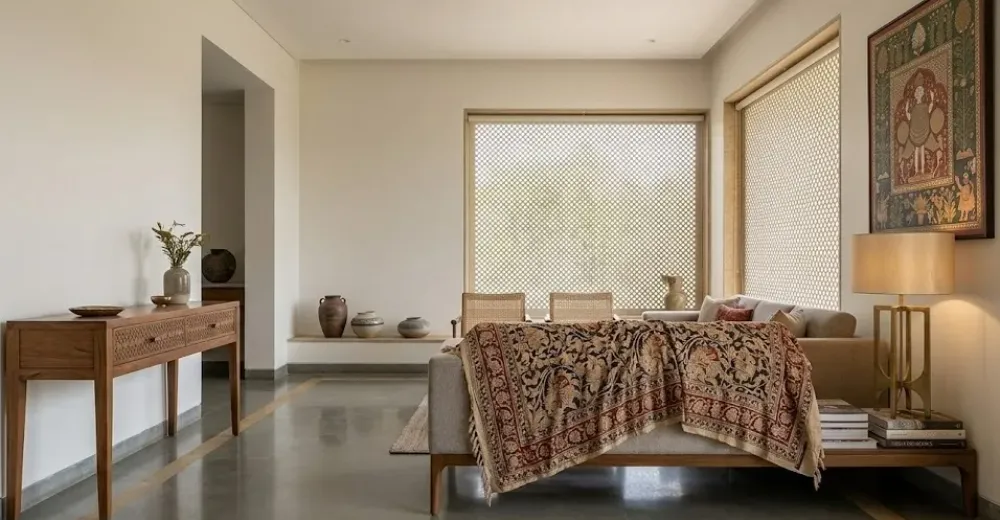
A throw on a sofa is both functional and compositional. Fold it over one arm for a relaxed arrangement, drape it across the back for a more considered look, or leave it loosely across the seat for the kind of casual ease that takes effort to fake. A handwoven cotton throw does this naturally because the drape of natural fibre falls the way fabric is meant to fall, not in the rigid geometry of a stiff synthetic.
On the Bed
A throw at the end of a bed adds a layer of texture and warmth without the formality of a duvet or quilt. It is the layer that gets pulled over on a cool night and folded back in the morning. For this use, a handwoven cotton or lightweight wool throw in a tone that complements the quilt beneath it is the most considered choice.
As a Layering Piece
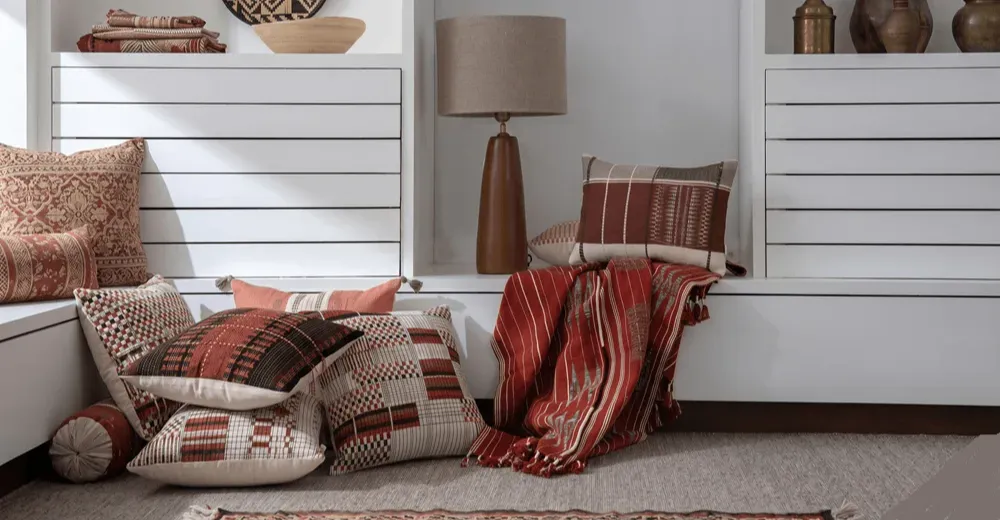
A handwoven throw travels. It goes to the reading chair, the guest bedroom, the balcony on a cool evening. Its versatility is a function of its natural fibre construction: it is not so heavy that it feels cumbersome and not so light that it fails to provide warmth. It belongs wherever you bring it.
The Same Logic Applies to Handwoven Quilts
What is true of handwoven throws is equally true of handwoven quilts. A machine-made synthetic-fill quilt looks full and plush at purchase and declines steadily over three to five years. A handmade Kantha or patchwork cotton quilt, like those in the Nimmit collection, is a textile object that improves with use. The Kantha running stitch becomes softer and more supple. The patchwork cotton develops warmth of surface that accumulates from being well-used.
Nimmit’s quilt collection includes Kantha-stitched and patchwork designs made by artisans for whom this craft is both vocation and ongoing practice. Available at nimmit.in/product-category/bed-and-bath/quilts/.
Handwoven Cotton Throws: Browse Nimmit’s Collection
Nimmit’s throws collection includes handwoven pieces in cotton, wool, and alpaca, made by skilled Indian artisans using traditional techniques. Every piece is made from natural fibres with no synthetic blends or chemical finishes. Browse the full collection at nimmit.in/product-category/living/throws/.
The throw you choose is the one you will reach for without thinking. Make it the one that has been made with care.
FAQ Section
Q1: Is a handwoven cotton throw better than a regular throw?
A: For long-term use, yes. A handwoven cotton throw gets softer with every wash, drapes naturally, contains no chemical finishing agents, and lasts significantly longer than most machine-made alternatives. The softness is structural, built into the weave, rather than applied as a treatment that washes out.
Q2: What makes a handwoven throw different from a machine-made one?
A: A handwoven throw is made by a person on a traditional loom, controlling tension and weave structure by hand. This produces a fabric with natural texture variation, an open weave that breathes, and a drape that synthetic or industrially produced fabric does not have. At Nimmit, we also know who made the throw, which community, which weaving tradition, which hands. That connection between maker and object is part of what you are choosing.
Q3: Are handwoven cotton throws good for Indian summers?
A: Yes. The open structure of handloom cotton allows natural airflow, making it genuinely comfortable in warm and humid conditions. This is not a thread count claim. It is structural breathability, the natural result of fabric woven at human pace without tight industrial tension. Nimmit also offers lighter cotton weights specifically suited to year-round sofa use in warmer climates.
Q4: What fibres are available in Nimmit’s throws collection?
A: Nimmit’s throws are available in cotton, wool, and alpaca. Cotton is the most versatile, suitable for year-round use. Wool provides warmth and natural temperature regulation. Alpaca is among the softest natural fibres available, hypoallergenic and suitable for sensitive skin. All are natural fibres with no synthetic blending.
Q5: How do I care for a handwoven cotton throw?
A: Hand wash or machine wash on a gentle cycle in cool water with mild detergent. Line dry or dry flat. Avoid tumble drying on high heat and do not use bleach or fabric softeners, which coat natural cotton fibres and affect the quality of the weave over time. With simple care, a handwoven throw improves rather than declines with washing.
Q6: Where can I buy a handwoven cotton throw in India?
A: At nimmit.in/product-category/living/throws/. Nimmit’s throws are made by skilled Indian artisans using traditional handloom techniques in natural cotton, wool, and alpaca. We ship across India and globally in INR, USD, EUR, and GBP.