
No products in the cart.
Categories:
- Accessories4949 products
- Bags2222 products
- Tablet / Laptop Sleeves1111 products
- Toys1616 products
- Apparel2929 products
- Bed & Bath2727 products
- Quilts1717 products
- Terry Towels1010 products
- Décor106106 products
- Baskets2121 products
- Boxes & Containers55 products
- Candle Holders / Stands99 products
- Handmade Flowers55 products
- Lamp Bases1010 products
- Lampshades1111 products
- Oil Lamps11 product
- Paper Weights22 products
- Pendant Lamps1313 products
- Planters1212 products
- Textile Art99 products
- Vases55 products
- Votives33 products
- Dining & Kitchen144144 products
- Bowls2727 products
- Bread Boxes22 products
- Carafes & Jugs11 product
- Chopping Boards44 products
- Coasters77 products
- Dinnerware1616 products
- Kettles11 product
- Mugs & Tumblers55 products
- Napkin Rings66 products
- Napkins2323 products
- Pans11 product
- Placemats1616 products
- Platters11 product
- Table Runners1616 products
- Trays1717 products
- Trivets11 product
- Living5151 products
- Cushion Covers4646 products
- Throws55 products
- Utilities88 products
- Laundry / Shoe Bags88 products
tags:
Aluminium Artisanal Bamboo Banana Fibre Banjara Block Prints Braided Cane Ceramic Contemporary Cotton Cotton Linen Cotton Silk Ethnic Floral Gond Art Hand-Painted Handcrafted Hand Embroidered Handloom Handmade Handspun Ikat Jamdani Jute Kalamkari Kantha Kota Doria Linen Marble Naga Natural Fibre Patchwork Raku Repurposed Fabric Silk Silk Chiffon Stone Tassels Terracotta Textured Tote Bags Wooden Wool
Showing 37–46 of 46 results


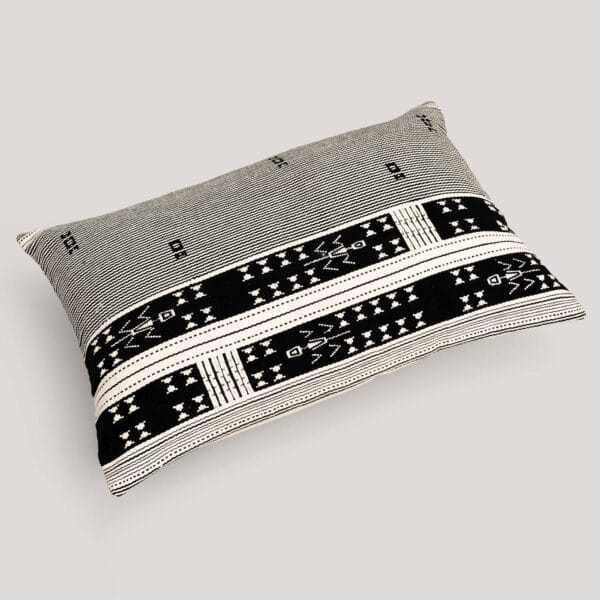

The most transformative change you can make to a living room does not involve paint or furniture. It involves what sits on the sofa. A set of handwoven cushion covers, chosen with some care, changes the entire register of a room. They introduce texture, warmth, and the evidence of craft into a space that may otherwise be functional but not particularly felt.
Nimmit’s handwoven cushion covers are made by artisans working in some of India’s most significant weaving traditions. Each cover is a small piece of cloth made with the same attention that goes into a full garment or a quilt.
Cushion Covers: The Weave Traditions Behind Each Design
Our cushion cover collection draws from four distinct weaving and craft traditions, each with its own community of makers, its own technical vocabulary, and its own visual language. Understanding what you are choosing makes the choice more considered.
Tangaliya Covers: Gujarat’s Dotted Weave
Tangaliya is a GI-tagged handweaving tradition from Surendranagar district in Gujarat, practised by the Dangasia weaver community. The technique produces small raised dots or motifs on the fabric surface through additional weft threads, creating a textile with remarkable tactile depth. Under close examination, a Tangaliya weave is extraordinary. From the distance of a sofa arm, it reads as richness.
The Dangasia weavers who produce Tangaliya cloth are specialists. Tangaliya is their practice, refined over generations. Each cushion cover in Tangaliya fabric carries the accumulated knowledge of that community.
Ikat Covers: Pattern from the Thread Up
Ikat cushion covers are woven from threads that have been resist-dyed before weaving. The pattern forms at the intersections of the dyed threads during the weaving process, with the characteristic soft edges and tonal variation that distinguish Ikat from printed fabric. No Ikat pattern is mechanically precise. The slight bleed in the motif, the tonal shift across the surface, the variation from one cushion to the next: all of this is the natural result of a process that is controlled but not automated.
Naga Woven Covers: Structure as Pattern
Naga textiles from India’s Northeast are characterised by bold geometric stripe patterns woven directly into the cloth. In a Naga woven cushion cover, the pattern and the structure of the fabric are one and the same. There is no surface treatment, no print, no embroidery. The design exists because of how the cloth was woven. This gives Naga covers a particular authority in a room: a boldness that comes from the cloth itself.
Embroidered Cotton Covers: Surface and Depth
Some covers in this collection feature hand embroidery applied to handwoven cotton cloth. The embroidery is worked by artisans for whom needlework is a primary skill, using thread colours and stitch patterns that are specific to their regional tradition. The result is a cover with both the texture of the woven base and the surface detail of the embroidered design.
How to Style Handwoven Cushion Covers: A Short Guide
Mixing Weave Traditions
A Tangaliya cover in teal alongside an Ikat cover in sand and a Naga stripe in a third tone creates layering that reads as curated without matching. The textural language of handwoven cloth provides the unity. The variation in pattern provides the interest.
Odd Numbers and Mixed Sizes
Three or five cushions almost always look more considered than two or four. Mix a 24-inch cover with two 18-inch covers and a 14-inch accent. The different sizes create depth on a flat sofa surface in a way that same-size arrangements cannot.
Let the Textile Be the Statement
The most common mistake with handwoven cushion covers is cluttering around them. A Tangaliya cover in teal on a natural linen sofa does not need a matching throw, a complementary rug, and coordinated accessories to work. The weave itself is the decor. Restraint is the right response.
Handwoven Cushion Covers: The Detail Worth Getting Right
Browse the full collection above. Each cover is made in small quantities. They are not restocked identically when they sell out.
Shop more: Handwoven Throws | Cotton Quilts | Natural Fibre Baskets | Handwoven & Handprinted Textile Art
Frequently Asked Questions
Q1. What is Tangaliya weave and who makes it?
Tangaliya is a GI-tagged handweaving tradition from Surendranagar, Gujarat, practised by the Dangasia weaver community. It produces small raised dot motifs through additional weft threads. The weavers who make it are specialists in this specific technique. Buying a Tangaliya cushion cover from Nimmit directly supports those weavers and keeps the tradition economically viable.
Q2: How do I wash handwoven cushion covers?
Dry clean only. Do not wash or bleach. Steam or iron on low heat if required. With simple care, handwoven covers improve over time. The natural cotton softens and the colours deepen slightly with use.
Q3:How many cushion covers do I need for a three-seater sofa?
Three to five is the range. Three creates a composed, edited look. Five allows more layering and texture variation. Odd numbers generally read as more natural than even arrangements. Mix two or three weave traditions and two sizes for the most considered result.
Q4: Are handwoven cushion covers suitable as gifts?
A set of handwoven cushion covers is one of the most considered home decor gifts available. They are beautiful, functional, and carry the story of the artisan community that made them. We ship globally and can include a note explaining the specific weave tradition behind the covers you have chosen.
Q5:Do all the covers in the collection fit standard cushion inserts?
Our covers are designed for standard 18-inch and 24-inch cushion inserts. Specific dimensions are listed on each product page. If you have a specific size requirement, contact admin@nimmit.in.